
Interactive Communication
Your message becomes an experience your audience explores
The brain filters out thousands of passive messages every day. Multimedia kiosks, transparent displays, 3D holograms and virtual avatars break through that filter: your audience interacts, explores and remembers.
What it is
Interactive communication: when the message becomes an experience
Interactive communication turns your message from passive content into an active experience. Unlike signs, banners, brochures and even looping displays, which the brain filters out automatically, an interactive system engages the visitor: it reacts to their presence, answers their questions and adapts to their behaviour. Multimedia kiosks, transparent displays, holographic projections and Airdraw 3D holograms, AI avatars, digital wayfinding, digital signage with IoT sensors: every solution is designed to break through the mental filter and generate attention, interaction and recall.
The problem
Your audience ignores your messages.
Signs, monitors, brochures, posters: the human brain filters out thousands of them every day. People see them without seeing them. It is a survival mechanism: too many stimuli, zero attention. Your message, however important, gets lost in the background noise.
Now picture a wall that comes to life when someone approaches. A hologram that appears out of nowhere and tells your story. A kiosk that answers a visitor's questions without them touching a thing. A virtual avatar that welcomes your guests in five languages, around the clock. This is what happens when the message becomes an experience: the mental filter switches off, attention switches on and the memory takes hold. Our clients tell us that visitors come back to interact with the installations again and again, photograph them and share them.
Our approach
We start from your content, not from technology
What is the message you want to communicate? To whom? In what context? These are the first questions. Technology comes afterwards. We design and build the interactive communication system best suited to your content and your space: it might be a touchless info-point in a lobby, a hologram in a showroom, a responsive wall in a museum, or an avatar at a reception desk. Every solution is designed to run autonomously, to be updated remotely and to deliver measurable results. We work with museums, public bodies, trade shows, businesses and agencies that need a reliable technology partner to turn their content into experiences their audience remembers.
“Actions performed first-hand are remembered better than those observed passively. When the body takes part, the memory is consolidated.”
Zimmer & Engelkamp, Journal of Memory and Language (2003)
The technologies that make it possible
Tools that serve your goal
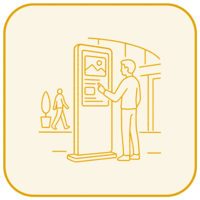
Multimedia kiosks and AR kiosks
Indoor and outdoor multimedia kiosks and AR kiosks with touchless interaction. For museums, trade shows, shopping centres, hospitals and public administration. Content updateable remotely
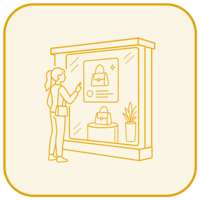
LED walls, video walls and transparent displays
Large-format LED walls and video walls, transparent LED walls and transparent LED film for shop windows, plus transparent OLED displays that show digital content while still revealing the real product behind the screen. High-impact communication for lobbies, retail, trade shows and public spaces, visible even in strong ambient light
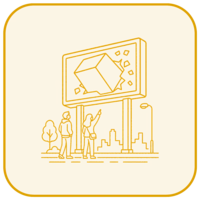
3D billboards and anamorphic LED
Curved and flat LED screens with forced-perspective 3D content (naked-eye 3D). The three-dimensional effect is visible without glasses. Available indoor and outdoor for facades, corporate entrances, trade shows and retail
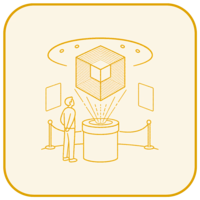
3D holography, holographic fans and volumetric displays
3D holographic projections using our proprietary Airdraw technology, holographic fans (holofan) for shop windows and events, and naked-eye volumetric displays that need no glasses: three-dimensional images that appear suspended in mid-air. For product launches, shop windows, showrooms, reception areas and events
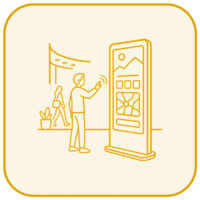
Smart glass
Switchable glass that turns from clear to opaque on command and becomes a projection surface. A single glazed wall is window, screen and partition all at once: privacy, communication and stage design in one element
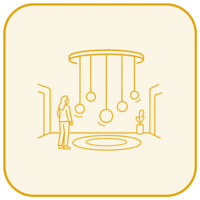
Kinetic installations
Moving elements and surfaces synchronised with light and content, for entrances, lobbies and corporate spaces that catch the eye and stay in the memory
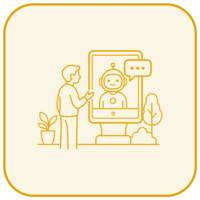
AI avatars and virtual assistants
3D avatars and AI avatars that welcome, inform and guide visitors in multiple languages. Virtual hosts available 24/7. Conversational virtual assistants powered by AI
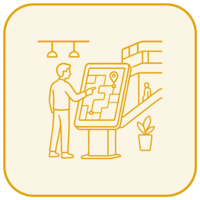
Wayfinding and interactive signage
Digital wayfinding, navigable maps and interactive signage to orient visitors. Integration with ticketing systems and footfall analytics
Interactive digital signage
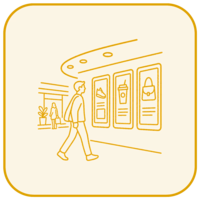
Digital signage with sensors, smart devices and IoT. Dynamic content that adapts to the audience, the time of day and the context in real time
We work with companies, agencies, architecture studios, museums and institutions that want to offer their audience something unique. By your side as a technology partner, at every stage of the project.
Who has already done it
Real-world results

Luxottica Holographic Showroom
Sistema olografico 3D con software custom per esplorare modelli di occhiali da tablet in tempo reale.

Venice Casino
Schermi olografici, pavimenti interattivi e scenari immersivi per la casa da gioco più antica del mondo.

Adidas Interactive Windows
Vetrine multimediali interattive per la campagna nazionale adidas Is All In in diverse città italiane.
Frequently asked questions
FAQ about Interactive Communication
What is a multimedia kiosk?
A multimedia kiosk is an upright interactive device with a touchscreen used to inform, guide and engage visitors. It is used in museums, trade shows, businesses, public administration and public spaces. Available in indoor, outdoor, touchscreen and touchless versions.
What is a transparent display?
A transparent display is a screen that shows digital content while keeping whatever sits behind it visible. Ideal for shop windows, museum cases and showrooms. It combines digital communication with the physical object.
What is a virtual avatar?
A virtual avatar is a digital human figure that welcomes, informs and guides visitors in multiple languages, available around the clock. It frees up staff for higher-value tasks and delivers a premium, personalised experience.
What are holographic projections and 3D holograms?
Holographic projections are display systems that create three-dimensional images floating in space. Vimage uses its proprietary Airdraw technology for professional holographic projections. They are used for product presentations, museum storytelling and high-impact communication at trade shows and in showrooms.
What is a 3D billboard?
A 3D billboard is an LED screen (curved or flat) that plays video content with a forced-perspective three-dimensional effect, visible to the naked eye without glasses. Available in indoor and outdoor formats, it is used for corporate facades, showroom entrances, trade shows and retail. The sense of depth grabs attention and prompts spontaneous sharing.
What is the difference between transparent OLED and transparent LED displays?
A transparent OLED display offers a very sharp image and is ideal for display cases, product windows and close-up viewing. Transparent LED, as a LED wall or adhesive film, is brighter and scales up to large windows and facades, remaining visible even in broad daylight. The right choice depends on size, viewing distance and ambient light.
What is smart glass?
Smart glass switches from clear to opaque on command and can become a projection surface. It protects privacy when needed, communicates content and creates stage-set effects, all with a single glazed wall. Ideal for offices, showrooms, hotels and retail.
Does interactive communication replace traditional communication?
No, it strengthens it. Kiosks, displays and avatars complement existing communication by adding interactivity, measurability and engagement. The message becomes an experience your audience actively explores.
Have a project in mind?
Tell us about it: first consultation free, no commitment.
Tell us about your projectInsights from the blog
Learn more
Transparent display: OLED vs LED compared
What a transparent display is and how transparent OLED and transparent LED differ: features, use cases and the criteria for choosing the right technology for shop windows, retail, museums and showrooms.
3D billboard: what it is, how it works and where it is used in 2026
A complete guide to 3D billboards and anamorphic LED screens: how naked-eye 3D technology works, the differences between indoor and outdoor, and applications for building facades, trade shows, retail and corporate communication.
Smart glass: what it is and how it works
What smart glass is and how PDLC technology switches it from clear to opaque on command. How it doubles as a projection surface, where it is used across offices, showrooms, hotels, retail, fitting rooms and museums, how the adhesive film retrofits existing glazing, and how to choose the right solution.
Keep exploring
Immersive Experiences
Immersive projections, interactive floors and walls, scent, sound and haptic cues: every sense is engaged to create an emotional memory that lasts, gets talked about and brings people back.
Interactive Gamification
People who take part actively remember for months. Custom-built games for your brand and your event, quiz games and competitive installations turn any setting into an arena where your audience takes centre stage.
Sensory Marketing
Seven people out of ten make decisions driven by emotion. Virtual mirrors, scent marketing, interactive windows and sensory engagement systems turn every visit into an experience that lingers and converts.
Let's talk about your project
Tell us your idea for interactive communication. We reply within 24 hours.